

The questions of what it means to be a husband and father have never been more pressing—or more hotly debated—in the Christian world. At the heart of these debates stands the often-misunderstood concept of male headship and spiritual leadership. Is it about control, privilege, or power? Or does Scripture paint a far more nuanced, sacrificial, and Christ-like vision—one that calls men not to domination, but to serve, bless, and lay down their very lives for their families?

In the quiet kitchen of a convent in Vilnius, a Polish nun named Maria Faustina Kowalska once heard a message that would echo through the spiritual halls of Catholicism: “Bake some bread.” At first glance, this request from Jesus, spoken in the intimacy of prayer, may seem simple—even quaint. Yet behind these words lies a profound theological question: How do we discern authentic revelation, and what does it mean for Jesus to speak to us today?

The Communion Antiphon, sung or recited as the faithful approach the Lord’s Table, is rooted deeply in both Scripture and the living tradition of the Church. Contrary to common misconceptions, it is not a merely “medieval” or “traditional” custom, but arises from the very heart of biblical worship.

Christmas 1939 was bittersweet for the di Giorgi family in Sicily. Their newborn daughter, Gemma, brought joy and hope — until her mother noticed the strange, almost luminous stillness of her eyes. Soon the terrible truth was revealed: Gemma could not see. Doctors confirmed the impossible — she was born without pupils. The diagnosis was final and devastating: “She will never see.” Yet in the mysterious ways of faith, Gemma’s story was only just beginning.
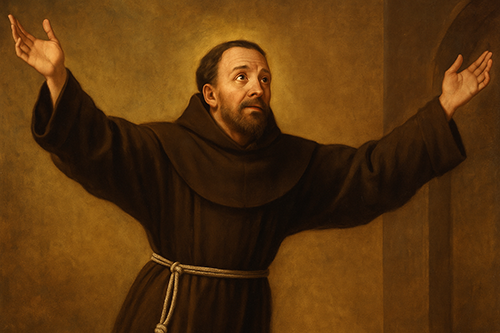
If you were to make a list of the least likely people to become a Catholic saint, Joseph Desa—better known as Saint Joseph of Cupertino—would have been right at the top. Born in 1603 in the small Italian town of Cupertino, Joseph was awkward, absent-minded, and, by all accounts, terrible at school. His neighbors thought he was slow-witted; his teachers despaired; even the monks who would later shelter him struggled to see any sign of special grace.
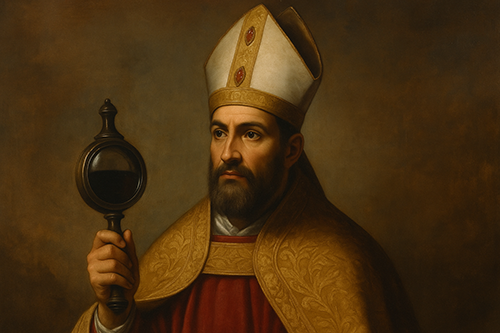
In the grand cathedral of Naples, a hush falls over the crowd. Pilgrims from across the world hold their breath as the silver reliquary with dark, clotted blood is raised for all to see. “Il miracolo è fatto!”—“The miracle has happened!” The words ring out as, before their eyes, the solidified blood liquefies, swirling and bubbling in its glass ampoule. For centuries, this miracle has repeated itself, always on the same three days: the Saturday before the first Sunday of May, September 19—St. Januarius’ feast day—and December 16, the anniversary of the saint’s miraculous intervention that saved Naples from Vesuvius (Wikipedia).
- Pilgrimage to Italy “In the Footsteps of the Saints”
- Who Were the Catholic Heroes of Revolutionary France? The Rebels of the Vendée – Faith, Courage, and Fidelity
- What Devotions Does the Church Celebrate in September? Mary’s Sources of Comfort and Hope
- Our Lady’s Little Creature: the Ladybug – a Tiny Sign of Great Love
- What Really Happens at a Canonization? (7 September 2025)
- St. Teresa of Calcutta – patron of the humble and the poor
- There’s a Novena for That?! — A Catholic Guide to Nine Days of Prayer
- 4 Patron Saints for Restless Nights — Pray for Peaceful Sleep
- What Was John Paul II’s New Evangelization?
- From Oklahoma Fields to Guatemalan Martyrdom — The Sacrificial Love of Blessed Stanley Rother