





What awaits us in the coming days (11–17 October 2026)
Highlights of the week
11 October — Twenty-Eighth Sunday in Ordinary Time; in the parish calendar, St John XXIII: God prepares a feast for all peoples, but the Gospel reminds us that an invitation requires a response. Sunday takes precedence over the memorial of St John XXIII, whose pontificate remains associated with pastoral openness, peace and the Second Vatican Council.
12 October — Monday of the Twenty-Eighth Week in Ordinary Time; St Wilfrid and parish remembrance of St Carlo Acutis: Jesus rejects the constant demand for extraordinary signs and calls people to conversion. Carlo Acutis reminds us that love of the Eucharist and responsible use of technology can become a path to holiness in the digital age.
13 October — Tuesday of the Twenty-Eighth Week in Ordinary Time; St Edward the Confessor: St Paul speaks of the freedom found in Christ. Edward reminds us that leadership itself can become a path of service, justice and concern for peace.
14 October — Wednesday of the Twenty-Eighth Week in Ordinary Time; St Callistus I, Pope and Martyr: St Paul contrasts the works of the flesh with the fruits of the Spirit. Love, joy, peace, patience and gentleness become the clearest test of a life genuinely guided by God.
15 October — St Teresa of Jesus of Ávila, Virgin and Doctor of the Church: the great reformer of Carmel leads us towards prayer understood as friendship with God. Her message remains simple and demanding: amid the instability of the world, “God alone suffices.”
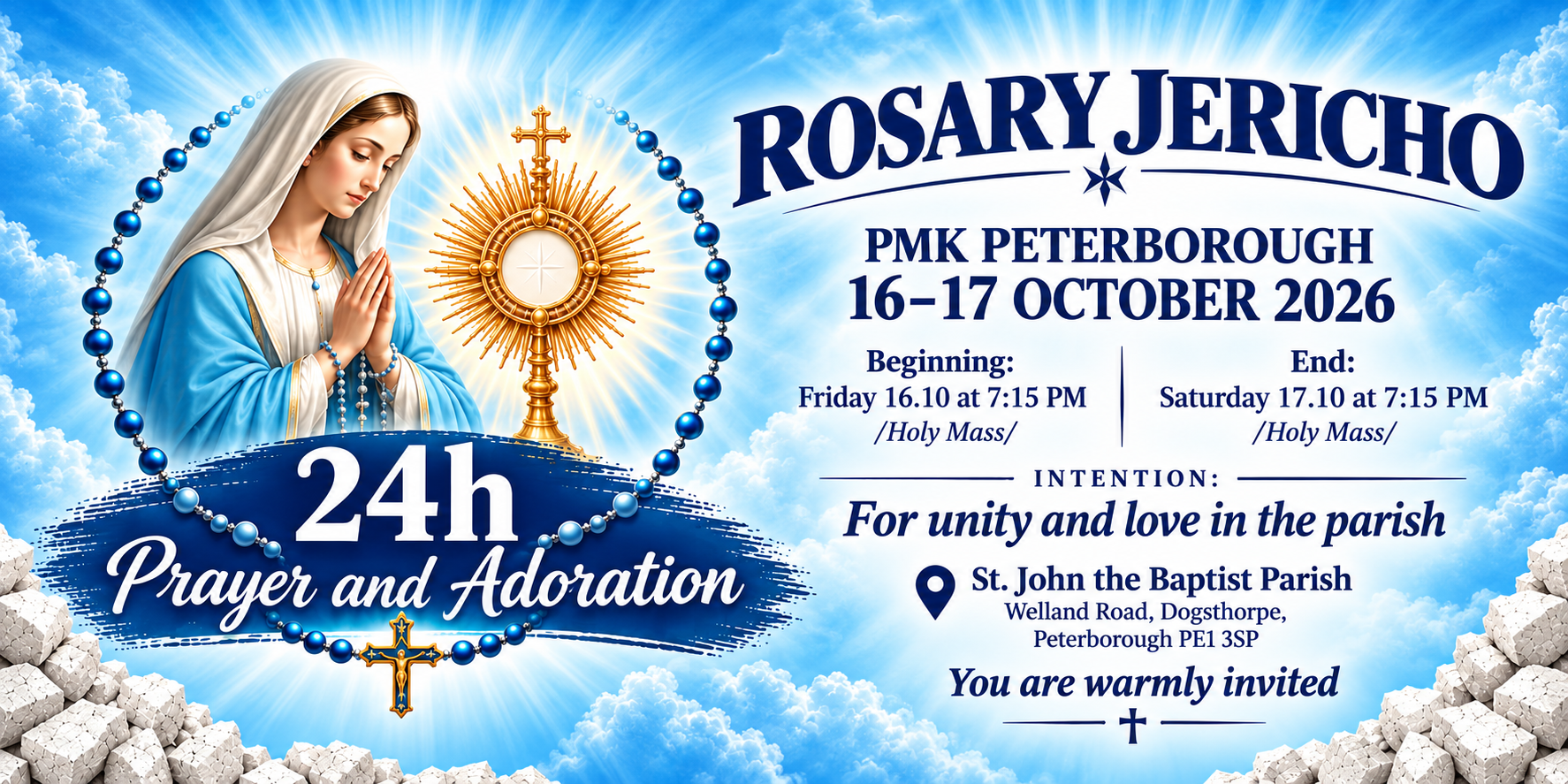
16 October — Friday of the Twenty-Eighth Week in Ordinary Time; St Hedwig and St Margaret Mary Alacoque: Jesus tells His disciples not to be afraid. St Hedwig shows how wealth and position can be used to serve the poor, while Margaret Mary leads us towards devotion to the Sacred Heart of Jesus.
17 October — St Ignatius of Antioch, Bishop and Martyr: one of the great Apostolic Fathers reminds us that Christian witness involves the unity of faith, the Eucharist and readiness to remain faithful even when faithfulness carries a cost.
Catholic Calendar: 11.10–17.10.2026
Sunday, 11 October 2026 — Twenty-Eighth Sunday in Ordinary Time; St John XXIII
Liturgical designation: Twenty-Eighth Sunday in Ordinary Time (green), Year A, Year II weekday cycle. The Twenty-Eighth Week in Ordinary Time and Week IV of the Psalter begin. Sunday takes precedence over the memorial of St John XXIII.
Readings: Is 25:6–10a; Ps 23; Phil 4:12–14, 19–20; Mt 22:1–14.
Meaning of the day: Isaiah gives us the image of a great feast prepared by God for all nations. Death is destroyed, tears are wiped away and the people can finally say, “This is our God.” The Psalm presents the Lord as the Shepherd who leads His people through the dark valley towards a table prepared for them. St Paul adds a deeply personal testimony: he has learned both poverty and abundance because his true strength is Christ. The Gospel of the wedding banquet shows, however, that God’s invitation can be rejected. Some are too occupied with their own affairs, while others respond with hostility. When the hall is finally filled with people gathered from the roads, the image of the wedding garment reminds us that receiving grace cannot mean remaining entirely unchanged. God invites freely, but our response should lead to conversion. The parish calendar also recalls St John XXIII, the “Good Pope”, who convoked the Second Vatican Council and became a particular witness to peace, simplicity and pastoral courage.
Quote: “Many are called, but few are chosen” (Mt 22:14).
Prayer: Lord, thank You for inviting me to Your table. Do not allow the business of everyday life to silence Your call. Through the intercession of St John XXIII, give me a heart open to truth, peace and renewal.
Practice: Ask yourself whether there is an invitation from God you have been postponing: prayer, confession, reconciliation, service or a concrete change in your life.
Saints of the day: St John XXIII — Pope, initiator of the Second Vatican Council and witness to peace.
Monday, 12 October 2026 — Monday of the Twenty-Eighth Week in Ordinary Time; St Wilfrid; St Carlo Acutis
Liturgical designation: Weekday of the Twenty-Eighth Week in Ordinary Time (green) or optional memorial of St Wilfrid, bishop and missionary (white). Week IV of the Psalter. The parish calendar also remembers St Carlo Acutis.
Readings: Gal 4:22–24, 26–27, 31–5:1; Ps 113; Lk 11:29–32.
Meaning of the day: St Paul reminds the Galatians that Christ has set humanity free for true freedom. Christian freedom does not mean life without responsibility, but freedom from slavery to sin and fear. The Gospel shows a crowd demanding an extraordinary sign from Jesus. Christ answers that the sign will be Jonah — a call to conversion and a foreshadowing of the Paschal mystery of death and resurrection. The problem is not a lack of signs, but a heart that constantly asks for one more proof so that it does not have to decide. St Wilfrid was an important bishop and missionary in Anglo-Saxon England. The parish site also recalls St Carlo Acutis, a young witness to the Eucharist and to responsible use of technology. He showed that computers and the internet do not necessarily lead away from God; they can serve evangelisation when the tools do not take control of the human heart.
Quote: “For freedom Christ has set us free” (cf. Gal 5:1).
Prayer: Lord Jesus, free me from sin, unhealthy attachments and the constant demand for proof. Through the intercession of St Carlo, teach me to use modern technology in ways that serve truth, goodness and Your Kingdom.
Practice: Take a deliberate break from unnecessary phone or social media use today and give that time to prayer or Eucharistic adoration.
Saints of the day: St Wilfrid — bishop and missionary; St Carlo Acutis — young witness to the Eucharist and evangelisation in the digital world.
Tuesday, 13 October 2026 — Tuesday of the Twenty-Eighth Week in Ordinary Time; St Edward the Confessor
Liturgical designation: Weekday of the Twenty-Eighth Week in Ordinary Time (green) or optional memorial of St Edward the Confessor, King (white). Week IV of the Psalter.
Readings: Gal 5:1–6; Ps 119; Lk 11:37–41.
Meaning of the day: St Paul again speaks of freedom, but immediately gives its most important test: what matters is “faith working through love.” An external sign is not enough if the heart remains closed. The same issue appears in the Gospel when a Pharisee is surprised that Jesus does not perform the ritual washing before the meal. Christ points towards the human interior. It is possible to be extremely careful about outward religious forms while neglecting greed, pride or lack of love. St Edward the Confessor, one of England’s best-known royal saints, was remembered as a ruler who sought to unite authority with piety, justice and care for the needy. His life reminds us that influence and position do not exempt a person from the Gospel; they create greater responsibility.
Quote: “Only faith working through love” (cf. Gal 5:6).
Prayer: God, cleanse my heart from what I hide beneath outward correctness. Through the intercession of St Edward, teach me to use every form of influence and responsibility for the good of others.
Practice: Instead of judging someone’s outward behaviour today, ask what needs purification in your own heart.
Saints of the day: St Edward the Confessor — King of England and witness to Christian service and responsible leadership.
Wednesday, 14 October 2026 — Wednesday of the Twenty-Eighth Week in Ordinary Time; St Callistus I, Pope and Martyr
Liturgical designation: Weekday of the Twenty-Eighth Week in Ordinary Time (green) or optional memorial of St Callistus I, Pope and Martyr (red). Week IV of the Psalter.
Readings: Gal 5:18–25; Ps 1; Lk 11:42–46.
Meaning of the day: St Paul offers one of the most practical descriptions of Christian life. On one side are behaviours flowing from selfishness and disordered desires; on the other are the fruits of the Spirit: love, joy, peace, patience, kindness, goodness, faithfulness, gentleness and self-control. These are not optional additions to faith but its visible fruit. In the Gospel Jesus criticises a religious attitude that concentrates on details while neglecting justice and the love of God. He speaks even more strongly to lawyers who place heavy burdens upon others but refuse to help carry them. St Callistus I, Pope of the early Church, became known in part for a more merciful approach towards sinners seeking reconciliation with the Church. His witness reminds us that truth and mercy do not have to be enemies.
Quote: “The fruit of the Spirit is love, joy, peace...” (Gal 5:22).
Prayer: Holy Spirit, make my life bear Your fruits. Through the intercession of St Callistus, teach me to unite fidelity to truth with mercy towards human weakness.
Practice: Choose one fruit of the Spirit — for example patience or gentleness — and practise it consciously throughout the day.
Saints of the day: St Callistus I — Pope and martyr, witness to the unity of truth and mercy.
Thursday, 15 October 2026 — St Teresa of Jesus of Ávila, Virgin and Doctor of the Church
Liturgical designation: Obligatory memorial of St Teresa of Jesus, virgin and Doctor of the Church (white). Week IV of the Psalter.
Weekday readings: Eph 1:1–10; Ps 98; Lk 11:47–54. Proper readings of the memorial may also be used.
Meaning of the day: The Letter to the Ephesians begins with a great hymn praising God, who chose humanity in Christ and desires to unite all things in Him. This provides a fitting perspective for the spirituality of St Teresa of Ávila. Teresa, a Carmelite nun, mystic, reformer and Doctor of the Church, taught that prayer is an encounter between two persons — the human person and the God who loves. Her spirituality was not an escape from life. Reforming Carmel demanded remarkable courage, organisational work, travel and endurance in the face of misunderstanding. Yet interior prayer remained at the centre. Teresa knew that without a relationship with God, religious activity can quickly become empty activism. Her famous words “God alone suffices” do not mean indifference towards people or the world. They mean discovering the foundation that no external change can remove.
Quote: “Let nothing disturb you, let nothing frighten you. God alone suffices.”
Prayer: God, through the intercession of St Teresa teach me true prayer — honest conversation and friendship with You. When everything around me changes, remind me that You remain faithful.
Practice: Spend fifteen minutes today in prayer without a prepared text. Simply tell God what is truly in your heart and remain for a while in silence.
Saints of the day: St Teresa of Jesus of Ávila — Carmelite, mystic, reformer and Doctor of the Church.
Friday, 16 October 2026 — Friday of the Twenty-Eighth Week in Ordinary Time; St Hedwig; St Margaret Mary Alacoque
Liturgical designation: Weekday of the Twenty-Eighth Week in Ordinary Time (green) or optional memorial of St Hedwig, religious, or St Margaret Mary Alacoque, virgin (white). Week IV of the Psalter.
Readings: Eph 1:11–14; Ps 33; Lk 12:1–7.
Meaning of the day: St Paul says that believers have been sealed with the Holy Spirit. Christian identity therefore does not arise primarily from other people’s opinions, achievements or social position, but from belonging to God. In the Gospel Jesus warns against hypocrisy and then tells His disciples not to be afraid. Even the hairs of their heads are numbered and not one sparrow is forgotten by God. St Hedwig of Silesia, a duchess and later religious, used her position to support the poor, hospitals and monasteries. Her life shows that wealth can be transformed from an instrument of selfishness into an instrument of service. St Margaret Mary Alacoque became a particular apostle of devotion to the Sacred Heart of Jesus, reminding the Church of Christ’s love seeking a human response.
Quote: “Do not fear; you are of more value than many sparrows” (cf. Lk 12:7).
Prayer: Jesus, free me from fear of human opinion and from hypocrisy. Through the intercession of St Hedwig teach me to share what I possess, and through St Margaret Mary lead me towards Your Sacred Heart.
Practice: Perform a discreet act of goodness that no one else needs to know about. If something is troubling you, repeat: “Jesus, I trust Your care for me.”
Saints of the day: St Hedwig — patroness of Silesia and works of mercy; St Margaret Mary Alacoque — apostle of the Sacred Heart of Jesus.
Saturday, 17 October 2026 — St Ignatius of Antioch, Bishop and Martyr
Liturgical designation: Obligatory memorial of St Ignatius of Antioch, Bishop and Martyr (red). Week IV of the Psalter.
Readings of the memorial: Phil 3:17–4:1; Ps 34; Jn 12:24–26. The weekday readings may also be used: Eph 1:15–23; Ps 8; Lk 12:8–12.
Meaning of the day: St Ignatius of Antioch belongs to the most important witnesses of the generation immediately following the Apostles. He was Bishop of Antioch and, while being taken to Rome where he would suffer martyrdom, wrote letters to Christian communities. These letters are among the most valuable surviving witnesses to the faith of the early Church. Ignatius strongly emphasised the unity of the Church, the ministry of the bishop, the reality of Christ’s Incarnation and the central place of the Eucharist. The readings of his memorial use the image of a grain of wheat that must fall into the earth and die in order to bear fruit. This is not an invitation to seek suffering for its own sake. It reveals the logic of love that no longer protects itself at every cost. Ignatius accepted martyrdom as the ultimate witness that Christ mattered to him more than earthly life. His radical faith raises a question that remains relevant: what does faithfulness to what we believe actually cost us?
Quote: “Unless a grain of wheat falls into the earth and dies, it remains alone; but if it dies, it bears much fruit” (cf. Jn 12:24).
Prayer: Lord Jesus, through the intercession of St Ignatius give me courage to bear faithful witness. Strengthen persecuted Christians and lead Your Church towards unity around You and the Eucharist.
Practice: Pray for persecuted Christians. Consider whether there is a situation where you hide your faith purely because you fear the opinions of others.
Saints of the day: St Ignatius of Antioch — Bishop, Apostolic Father, martyr and great witness to the Eucharist and the unity of the Church.
The period from 11 to 17 October 2026 begins with the image of God’s banquet. God invites humanity into something far greater than the daily rush, but the invitation requires a response. St John XXIII reminds us that the Church’s response to God’s call should combine fidelity with pastoral courage and peace.
The following days develop the theme of interior freedom. St Paul reminds us that Christ sets us free and that genuine faith works through love. St Carlo Acutis shows that holiness is possible in the digital world, Edward the Confessor demonstrates the holiness of responsible leadership, and Callistus reminds us of the need to hold truth and mercy together.
St Teresa of Ávila leads us towards prayer as friendship with God. St Hedwig and St Margaret Mary Alacoque reveal two dimensions of the response to divine love: practical concern for those in need and devotion to the Heart of Christ. The week concludes with Ignatius of Antioch, for whom faith, the Eucharist and the unity of the Church were more important than the security of his own life.
It is a week of moving from invitation to response, from outward appearances to truth, from slavery to freedom, from fear to trust and from private belief to courageous Christian witness.
Roman Martyrology and the remembrance of the saints (11–17 October 2026)
The week leads from the pastoral courage of St John XXIII through the youthful witness of St Carlo Acutis and the Christian service of Edward the Confessor towards the mysticism of Teresa of Ávila, devotion to the Sacred Heart and the martyrdom of Ignatius of Antioch.
11 October
Twenty-Eighth Sunday in Ordinary Time. The memorial of St John XXIII gives way to Sunday. A day of prayer for the Pope, bishops, the unity of the Church, peace and good fruits of pastoral renewal.
12 October
Monday of the Twenty-Eighth Week in Ordinary Time or St Wilfrid. Parish remembrance of St Carlo Acutis. A day of prayer for young people, internet users, programmers and all seeking holiness in ordinary life.
13 October
Tuesday of the Twenty-Eighth Week in Ordinary Time or St Edward the Confessor. A day of prayer for people in positions of authority and public responsibility, and for peace and justice.
14 October
Wednesday of the Twenty-Eighth Week in Ordinary Time or St Callistus I. A day of prayer for the fruits of the Holy Spirit and mercy towards those returning to God.
15 October
Memorial of St Teresa of Ávila. A day of prayer for Carmelites, contemplatives and everyone learning the way of interior prayer.
16 October
Friday of the Twenty-Eighth Week in Ordinary Time or St Hedwig or St Margaret Mary Alacoque. A day of prayer for the poor, married couples, lonely people and those devoted to the Sacred Heart.
17 October
Memorial of St Ignatius of Antioch. A day of prayer for persecuted Christians, bishops, the unity of the Church and a deep love for the Eucharist.
Prayer for 11.10–17.10.2026
Lord Jesus,
I thank You
because You continually invite me
to Your banquet,
to a life
whose meaning is greater
than my everyday concerns.
Do not allow me
to reject Your invitation
because of haste,
work,
habit
or indifference.
Through St John XXIII,
give Your Church peace,
courage
and wisdom
to discern the signs of the times.
Through St Carlo Acutis,
teach me to use
technology,
the internet
and modern tools
in a way
that does not lead me away from You,
but serves truth
and goodness.
Through St Edward the Confessor,
give wisdom to all
who have authority
and responsibility for others.
Through St Callistus,
give me a heart
able to unite
truth with mercy.
Holy Spirit,
let Your fruits grow in me:
love,
joy,
peace,
patience,
kindness,
faithfulness,
gentleness
and self-control.
Through St Teresa of Ávila,
teach me to pray
as one speaks with a Friend.
When everything changes,
remind me:
God alone suffices.
Through St Hedwig,
teach me to share
what I have received.
Through St Margaret Mary,
lead me
to the Sacred Heart of Jesus.
Through St Ignatius,
give me courage
to profess my faith
without fear
and without shame.
Strengthen Christians
who suffer
because of their faith.
Keep Your Church
in unity,
love
and fidelity to the Eucharist.
May the days
from 11 to 17 October
lead me
from invitation to response,
from appearances to truth,
from slavery to freedom,
from fear to trust,
from isolation to communion,
and from words
to a life truly
rooted in You.
Amen.