

But how did this come to be? Why does the Church, year after year, turn its gaze in July to the Blood that flowed from Christ’s wounds? The answer is a tapestry woven from history, war, papal courage, and the quiet faith of countless believers.
The year was 1848, and Italy was in chaos. The old order was crumbling. Revolutionaries challenged the Austrian grip on the peninsula, and the Pope himself—Pius IX—found his throne trembling. In a move that stunned Europe, Pius IX offered amnesty to the very rebels who had sought his overthrow, hoping for peace. Instead, his generosity emboldened them, and soon the Vatican itself was under threat. Priests were murdered in the streets of Rome. The Holy Father was besieged in his own palace, refusing to sanction a war against Catholic Austria.
As the city teetered on the brink, foreign diplomats orchestrated a daring escape. Disguised and fearful for his life, Pius IX fled Rome, seeking refuge in the coastal town of Gaeta. Here, exiled and stripped of his power, the Pope turned not to politics, but to prayer. He was not alone. With him was the Superior General of the Missionaries of the Precious Blood—a congregation founded by St. Gaspar del Bufalo, a man who had dedicated his life to the mystery of Christ’s sacrifice.
In Gaeta, surrounded by uncertainty and bloodshed across Italy, Pius IX found solace in an ancient devotion: the Precious Blood of Christ. The idea was simple, but profound. If the world was shedding blood in violence, the Church would answer with the blood of mercy and redemption. Inspired by the Superior General, the Pope resolved to institute a new feast, one that would honor the Blood Christ shed for humanity.
On June 30, 1849, Pius IX announced his intention: the first Sunday of July would henceforth be celebrated as the Feast of the Most Precious Blood. And then something remarkable happened. The war, which had seemed endless, began to abate. By the time the feast was celebrated, peace was returning to Italy. The faithful saw it as a sign—a living reminder that the blood of Christ, poured out in love, could overcome the blood spilled in hatred.
The devotion did not begin with Pius IX, of course. The reverence for Christ’s blood runs like a red thread through Christian history. In the earliest centuries, as Christians gathered in secret, they spoke in awe of the blood shed on Calvary. The Church Fathers wrote about it. St. John Chrysostom declared, “This Blood has purchased the entire world. It is the price of the earth; by it, Christ has redeemed the Church”.
In the Middle Ages, the devotion deepened. Saints like Catherine of Siena would speak of “the keys of his precious blood,” opening the door to salvation. Mystics claimed visions. The faithful composed prayers and litanies, many of which are still recited today.
But it was in the 19th century—amid revolutions and uncertainty—that the Church made the devotion official. Pius IX’s decision to dedicate July to the Precious Blood was both a spiritual act and a political statement. In a world obsessed with violence, the Church would not fight fire with fire. Instead, she would invite the world to contemplate the blood of a God who died for his enemies.
The Feast of the Most Precious Blood was first celebrated in July 1849. Fifty years later, Pope St. Pius X fixed the date as July 1, where it remained until liturgical reforms in 1969 made it a votive Mass, celebrated at the discretion of local communities.. Still, July remains the month of the Precious Blood, and the devotion has never faded.
Across the world, Catholics gather in parishes and chapels to pray the Litany of the Precious Blood. In Poland, the devotion is particularly strong. Churches like the Sanctuary of the Most Precious Blood in Poznań draw pilgrims year after year, and prayers invoking the Blood of Christ are woven into the fabric of Polish Catholic life.
Why this focus on blood? What does it mean to modern Catholics?
The answer is both theological and deeply personal. The Catechism teaches that “the Precious Blood is the price of our redemption.” In the Eucharist, Catholics believe they receive not just bread and wine, but the actual Body and Blood of Christ. It is a mystery that has inspired poets and saints for centuries.
St. Thomas Aquinas wrote, “This Blood, of which but one drop has the power to win all the world forgiveness of its world of sin”. St. John Vianney would urge his parishioners: “When you offer up the Blood of Jesus, you offer a gift of infinite worth, which can be equaled by no other”.
For ordinary believers, the Precious Blood is more than a doctrine. It is a lifeline. In times of plague, war, and personal struggle, Catholics have invoked the Blood of Christ for protection, healing, and peace. During the Second World War, Polish families would sprinkle holy water and pray, “Blood of Christ, cover us,” as bombs fell over their towns.
There are countless stories, both grand and humble, of the Precious Blood at work. In the 19th century, the Missionaries of the Precious Blood traveled through war-torn Europe, preaching peace and reconciliation. One priest, caught between warring factions, is said to have held up a crucifix and cried, “By the Blood of Christ, I beg you: lay down your arms!” The soldiers, stunned, lowered their weapons.
In Poland, devotion to the Precious Blood is often intertwined with national survival. During times of partition and persecution, Polish Catholics would gather in secret to pray for deliverance, entrusting their nation to the Blood of Christ. This faith was not in vain; Poland’s Catholic identity, preserved “with blood, zeal, and grit,” survived even the darkest eras.
Today, the devotion remains as urgent as ever. As the world faces new crises—pandemics, wars, divisions—the Church continues to turn to the Precious Blood as a source of hope.
Pope St. John XXIII, in a 1960 apostolic letter, confessed how central the devotion was to his own childhood, growing up in a poor Italian family. He encouraged the faithful to pray the Litany of the Precious Blood, approved by the Church, as a way to draw close to the mystery of redemption.
The litany itself is a tapestry of faith: “Blood of Christ, only-begotten Son of the Eternal Father, save us. Blood of Christ, falling upon the earth in the agony, save us. Blood of Christ, shed profusely in the scourging, save us…”
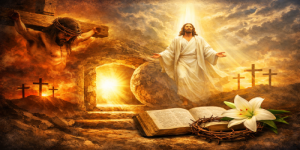
Ultimately, the month of the Precious Blood is a call to remember the price of love. Every July, as the Church contemplates the wounds of Christ, she invites the world to see in those wounds not just suffering, but salvation.
As St. Catherine of Siena put it, “Salvation is a door opened with the keys of his precious blood. Only Christ opens the door of love, which leads to the Father.”
In a world still marked by violence and fear, the devotion to the Precious Blood is not an escape from reality. It is a challenge—to believe that mercy is stronger than hatred, and that, as the old hymn says, “there is a fountain filled with blood, drawn from Immanuel’s veins, and sinners plunged beneath that flood lose all their guilty stains.”
So this July, whether in a grand cathedral or a quiet corner of your home, take a moment to contemplate the Precious Blood. Remember the Pope in exile, the saints who prayed, and the millions who, in every generation, have found hope in the redemptive power of Christ’s sacrifice.
For in the end, it’s not just a story from the past. It’s the heart of the Christian faith—a love that bleeds for the world, and never runs dry.