

The word "Alleluia" (or "Hallelujah" in its alternate form) originates from Hebrew, combining two fundamental elements: "Hallelu," meaning "praise" or "glorify," and "Yah," a shortened form of YHWH, the divine name of God. Thus, in its most literal translation, it means "Praise the Lord." This compound word represents one of the most ancient expressions of religious joy and thanksgiving in human history.
In Hebrew liturgical tradition, this sacred exclamation appears 23 times in the Book of Psalms, serving as both an opening and closing acclamation of praise. The placement is not arbitrary; according to rabbinical tradition, its occurrence exactly 22 times in the Psalms corresponds to the number of letters in the Hebrew alphabet, symbolizing the completeness of praise using every possible means of human expression.
As Christianity emerged from its Jewish roots, the word "Alleluia" maintained its sacred character while acquiring new layers of meaning. The early Christian church, particularly through the Greek-speaking communities, transliterated the Hebrew "Hallelujah" into "Alleluia," preserving its original sound while adapting it to different linguistic contexts. This preservation demonstrates the word's unique status as a universal expression of joy that transcends language barriers.
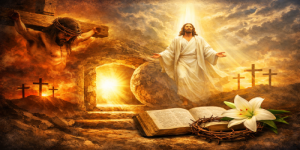
The Catholic Encyclopedia notes that when Christians adopted this acclamation, it quickly gained prominence in liturgical practice. Its significance became so profound that it earned the title "Great Alleluia" during the Easter Vigil, marking the end of the Lenten fast and the beginning of the celebration of Christ's resurrection.
In Christian worship, "Alleluia" serves multiple functions. It appears as:
- A Gospel Acclamation: Preparing the congregation for the reading of the Gospel
- A Paschal Exclamation: Expressing the joy of Easter
- A Doxological Element: Concluding prayers and psalms
- A Musical Motif: Inspiring countless musical compositions throughout history
The practice of omitting "Alleluia" during Lent, which developed in the early medieval period, creates a powerful theological statement. This temporary silence makes its Easter return all the more dramatic and meaningful, embodying the journey from penitence to joy, from death to resurrection.
Beyond its liturgical context, "Alleluia" has permeated various aspects of cultural expression. From Handel's famous "Hallelujah Chorus" to Leonard Cohen's contemporary classic "Hallelujah," the word continues to evoke powerful emotional and spiritual responses across religious and secular boundaries.
In different Christian traditions worldwide, the Easter proclamation of "Alleluia" takes on unique cultural forms:
In Orthodox churches, the greeting "Christ is risen!" with its response "He is risen indeed! Alleluia!" becomes a standard exchange throughout the Easter season, replacing ordinary greetings.
Latin American celebrations often incorporate "Alleluia" into vibrant processionals and feast day celebrations, combining sacred tradition with local cultural expressions.
African churches frequently use "Alleluia" as a rhythmic foundation for traditional praise songs, demonstrating how this ancient Hebrew word adapts to different musical and cultural contexts while maintaining its essential meaning.
The word "Alleluia" carries profound theological implications. It is not merely an expression of joy but a declaration of faith in God's sovereignty and goodness. When we proclaim "Alleluia," we join in what the Book of Revelation describes as the eternal song of heaven, where angels and saints continuously offer praise before the divine throne.
This eschatological dimension reminds believers that every earthly "Alleluia" is an echo of the eternal praise that awaits in the heavenly Jerusalem. As Saint Augustine observed, "We are an Easter people, and 'Alleluia' is our song."
In our modern context, where words often lose their power through overuse or trivialisation, "Alleluia" retains its ability to unite communities in praise and celebration. Its absence during Lent and triumphant return at Easter continue to mark the rhythm of the Christian year for millions of believers worldwide.
The word serves as a bridge between:
- Ancient and modern expressions of faith
- Individual and communal worship
- Earth and heaven
- Different Christian traditions and denominations
- Various cultural expressions of praise
"Alleluia" stands as more than a mere word; it is a testimony to the enduring power of sacred language to transcend time, culture, and human division. From its Hebrew origins through its Christian adaptation and into contemporary usage, it continues to fulfill its primary purpose: directing human hearts toward divine praise.
When we exclaim "He is risen! Alleluia!" during Easter, we participate in a tradition that connects us to thousands of years of faith, hope, and joy. In this simple yet profound word, we find the essence of religious expression: the human heart's eternal response to divine grace.
As we continue to use this ancient acclamation in our modern context, "Alleluia" reminds us that some expressions of faith are so fundamental, so deeply rooted in human spiritual experience, that they remain meaningful across all boundaries of time and culture. It truly is, as the early church recognized, the perfect word of praise.