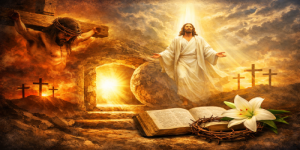


Before delving into the legendary encounter that would forever link Mary Magdalene to Easter eggs, we must first understand her pivotal role in Christianity's foundational moment. Mary Magdalene stands as one of the most significant figures in the Gospels, particularly in the resurrection narrative. All four evangelists place her at the empty tomb on Easter morning, making her the first witness to the risen Christ—a distinction that earned her the title "Apostle to the Apostles."
Historical records and early Christian writings paint a picture of a woman of means from Magdala, a prosperous fishing town on the Sea of Galilee. Following her encounter with Jesus, who according to Luke's Gospel had freed her from seven demons, she became one of his most devoted followers. She remained steadfast through his crucifixion when many others fled, and her faithfulness was rewarded with that first resurrection encounter.
According to ancient Christian tradition, following Christ's ascension, Mary Magdalene embarked on a bold mission that would take her to the heart of the Roman Empire. As a woman of some standing and means, she gained an audience with Emperor Tiberius Caesar himself—no small feat in the patriarchal society of first-century Rome. Her purpose was clear: to denounce Pontius Pilate's unjust condemnation of Jesus and to proclaim the miracle of the resurrection.
The momentous meeting between the holy woman and the emperor took place in the imperial palace on the Palatine Hill. Mary Magdalene came bearing a simple yet profound symbol: an egg. This choice was not arbitrary. In the ancient world, eggs were already powerful symbols of new life and renewal, used in various religious and cultural contexts across civilizations.
Standing before Tiberius, Mary Magdalene greeted him with words that would become the universal Easter proclamation: "Christ is risen!" The emperor, skeptical of such an outlandish claim, reportedly responded with characteristic Roman cynicism: "That is as likely as this egg turning red." According to the tradition, at that very moment, the egg in Mary's hand transformed from white to a deep crimson color, manifesting divine confirmation of her testimony.
This miraculous transformation served multiple symbolic purposes. The red color evoked the blood Christ shed on the cross, while the egg's hard shell breaking to reveal new life paralleled the stone rolled away from Christ's tomb. The miracle not only validated Mary's message but also established a powerful visual metaphor for the resurrection that would endure through the ages.
While modern historians may debate the historical accuracy of this encounter, its impact on Christian tradition is undeniable. The story emerged during the early centuries of Christianity, when the church was still developing its liturgical traditions and searching for ways to express complex theological truths through accessible symbols.
The tradition of red Easter eggs spread rapidly throughout the Christian world, taking root particularly strongly in Eastern Christianity. In Orthodox churches, the custom of distributing red eggs on Easter morning continues to this day, with the greeting "Christ is risen!" met with the response "Indeed, He is risen!" just as Mary Magdalene first proclaimed.
From this singular red egg, a rich tapestry of Easter egg traditions has evolved across different cultures and denominations. In Eastern Europe, the art of creating pisanki (in Poland) or pysanky (in Ukraine)—intricately decorated Easter eggs—developed into a sophisticated form of folk art, with designs and colors carrying deep symbolic meaning.
The practice of dying eggs red gradually expanded to include other colors, each acquiring its own symbolic significance. Green represented the awakening of nature, yellow symbolized wisdom and enlightenment, while white represented purity and grace. These meanings varied by region and tradition, but the fundamental connection to resurrection and new life remained constant.
Archaeological evidence supports the antiquity of these practices, with decorated eggs dating back to the early centuries of Christianity found in various locations across Europe and the Middle East. Some of the oldest examples, discovered in Poland, date to the 10th century, demonstrating the deep roots of this tradition in Christian culture.
The egg as a symbol of resurrection proved remarkably effective in teaching complex theological concepts. Just as a seemingly lifeless egg contains the potential for new life, so too did Christ's tomb become the source of eternal life. The hard shell represented the sealed tomb, while the act of breaking it open mirrored the resurrection.
This symbolism was particularly powerful during the early church's efforts to explain the concept of resurrection to converts from various cultural backgrounds. The egg provided a tangible, universal symbol that transcended language barriers and cultural differences, making the abstract concept of resurrection more accessible to diverse audiences.
Today, while chocolate eggs and commercial Easter celebrations might seem far removed from Mary Magdalene's encounter with Emperor Tiberius, the essential symbolism endures. Many churches continue to bless Easter eggs as part of their paschal celebrations, and the tradition of exchanging eggs as symbols of new life and resurrection remains vibrant in many Christian communities.
The story of Mary Magdalene and the first Easter egg reminds us of how profound theological truths can be conveyed through simple yet powerful symbols. It also highlights the important role of women in early Christianity and their contribution to the development of Christian traditions that continue to enrich religious and cultural life today.
In an age of increasing secularization, the story of Mary Magdalene and the Easter egg offers valuable insights into the power of religious symbols to convey meaning across generations. The tradition speaks to fundamental human experiences of transformation, hope, and new beginnings. Whether viewed through the lens of faith or cultural heritage, the story continues to resonate with contemporary audiences.
The courage of Mary Magdalene—standing before the most powerful man in the world to proclaim her truth—also provides an inspiring example of faith and conviction. Her story challenges modern believers to consider how they might bear witness to their own faith in contemporary contexts.
The legend of Mary Magdalene and the first Easter egg represents more than just the origin of a beloved holiday tradition. It embodies the core message of Christianity—that death gives way to life, and that faith can transform the ordinary into the extraordinary. As millions of Christians continue to exchange Easter eggs each year, they participate in a tradition that traces its roots back to that bold encounter between a faithful witness and a skeptical emperor.
This enduring tradition reminds us that sometimes the most profound truths are best conveyed through simple symbols, and that faith, like the spring season itself, carries the eternal promise of renewal and rebirth. In Mary Magdalene's red egg, we find a testament to the power of faith to transform not only objects but hearts and minds across the centuries.